





















Found a good "Tornado & Waterspout Survival" link? Let Us Know!
If you live in a Tornado zone, there
are only two things you can do to ensure that you or your family will not be
wiped out: Move or Prepare. Since most of us are tied to the area in which we
live by family, finances, history, jobs or any number of other reasons, few are
interested in evacuating to another part of the country. Besides, pretty much
everything east of the Rockies may be considered a "Tornado Zone."
That leaves preparation. Immediate preparation requires that you learn not only
what to do when a tornado is barreling down your street, but how to anticipate
the formation of tornadoes, how tornadoes act, their damage potential and
mechanism, and how to create a permanent safe zone at home or locate/create a
safety zone when away from home. Secondary preparation requires at a
minimum basic first-aid & CPR certification (or if you cannot afford
a certified course, finagling a deal with someone qualified to instruct you).
Finally, you will need to know how to deal with the wake of destruction left in
the path of a tornado - even if only to evacuate a disaster area, but especially
if you intend to attempt salvage and/or rescue operations. Primary precautions
should include structural instability, live wires, fuel & gas leaks, and
objects lodged in trees, eaves, wires, etc. which could fall, as well as ground
debris hazards.
The first step to surviving a
tornado is to listen for tornado watches and
warnings.
A tornado watch means that conditions are favorable for a tornado to form.
A tornado warning means there is
immediate danger of a tornado.
Recognizing tornado potential:
• A sickly greenish or greenish black color to the sky.
• If there is a watch or warning posted, then the fall of hail should be considered as a real danger sign. Hail can be common in some areas, however, and usually has no tornadic activity along with it.
• A strange quiet that occurs within or shortly after a thunderstorm.
• Clouds moving by very fast, especially in a rotating pattern or converging toward one area of the sky.
• A sound like a waterfall or rushing air at first, but turning into a roar as it comes closer. The sound of a tornado has been likened to that of both railroad trains and jets.
• Debris (including fish or small amphibians!) dropping from the sky.
• An obvious funnel-shaped, rotating cloud, or debris such as branches or leaves being pulled upwards, even if no funnel cloud is visible.
NOAA Map of US:
Number of Tornadoes per 1,000 square miles Hazard map. See also:
Wind
& Hurricane Zones
Taking Shelter From the
Storm: FEMA Mitigation Directorate - Building a Safe Room Inside Your House (Includes Construction Plans and Cost Estimates)
[PDF] An excellent pamphlet includes the maps linked to above.
Advanced Warning Operations
Course: [PDF] This is intended to be a review of tornado precursor signatures for the most part. As a first objective this lesson presents the signatures and how they relate to the ingredients for tornadogenesis. In some contexts, the storm scale signatures we can detect are directly related to the ingredients for tornadogenesis. In other contexts, the role of these same signatures in contributing to the ingredients for tornadogenesis are still in the realm of the unknown. As a second objective, this lesson covers the range of low-level velocity difference that lead to good tornado discrimination in a TVS signature based on the Tornado Warning Guidance (TWG) project conducted by the National Severe Storms Laboratory (NSSL) in 2001 and 2002. The results for the TVS velocity attributes were also extended to mesocyclone signatures, and near storm environment parameters. This lesson also mentions the ability of mesocyclone rotational velocity to discriminate tornadic from nontornadic storms. However, another lesson in IC3 delves into mesocyclone signatures and sampling in more detail.
See also:
MESOCYCLONE CHARACTERISTICS OF MINI SUPERCELL THUNDERSTORMS
A close look at
lowerings: If you could only look at one storm feature to determine its severe
potential, it would be the lowering. That is rather fortunate since many days (in the East) are cloudy or choked with haze and the underside detail is all you have access to. The lowering is a small (½-2km diameter) cloud extension attached to the underside of the rain-free base, usually about a
kilometer from the edge of the rain core.
What is a Tornado?
A tornado is an extremely intense windstorm known by a twisting, funnel-shaped cloud. The word "tornado" comes from the Spanish or Portuguese verb tornar, meaning "to turn." The event appears in storms all around the world, though they most commonly occur in a broad area of the American Midwest and South known as Tornado Alley, but some other countries see the storms occur in even higher densities. Tornadoes form from severe thunderstorms, usually spawned from squall lines and supercell thunderstorms, though they sometimes happen as a result of a hurricane. They are believed to be produced when cool air over takes a layer of warm air, forcing the warm air to rise rapidly.
Tornado Preparedness and Safety (Adopted by AMS Council 14 ...
Education, planning, awareness, prompt application of basic safety rules, and correct choice of shelter are critical elements by which individuals can reduce the risk of death or injury from tornadoes. Experience has demonstrated the importance of understanding the dangers associated with thunderstorms and tornadoes. It is also important to know the local geography, to develop contingency plans for protection, to keep up to date on the weather situation, especially on severe weather outlooks and watches, and to act promptly on warnings or reports of severe weather. Quick access to current warning information, especially during fast breaking events, is essential.
Tornado
Protection, Selecting Refuge Areas in Buildings (FEMA 431)
Design
and Construction Guidance for Community Shelters (FEMA 361)
Are cars really a safe option in tornadoes?
Excellent article with well reasoned options. Recommended reading.
Tornado
Safety - FSA1024 [PDF] Tornadoes can be deadly. With good warning systems, you can be alerted before the tornado is visible. This additional time makes tornado survival more likely. During bad weather, you must be alert and tune in for warnings. If a tornado should strike, well-made plans for emergency shelter can overcome this disaster and bring you, your family and your community through without personal injury.
Tornado
Life Cycle In this document, I want to try to apply some of our recent research findings to the problem of tornado forecasting. I rely heavily on a number of findings made by Paul Markowski while working on his graduate degrees at the University of Oklahoma. We are actively pursuing new knowledge to aid in the tornado forecasting and warning problem, and the ideas on this web page are going to change with time. We would appreciate feedback from anyone involved in tornado forecasting regarding the application of these ideas.
What's A Wall Cloud? A wall cloud is a beacon of hope for storm chasers searching for a twister, but why? Let me explain why you hear so much about "Wall Clouds" during severe weather. A wall cloud occurs only with strong thunderstorms and appears as a lowering cloud that extends out of the main large thunderstorm. An important quality of a wall cloud is that it is always rain free, meaning no rain falls from this lowering cloud. The reason a wall cloud has a rain free base is because the air is actually moving upward into the wall cloud. Because of this upward motion, rain cannot fall down through the wall cloud. This is a great benefit to storm chasers because it makes this wall cloud, and the possible tornado, rain free and thus visible.
weather.com
- Tornado! About Tornadoes Nice
little article with good graphics and pretty good advice on staying safe at home
and on the road.
Tornado Survival Tips
Tornadoes strike with incredible velocity. Wind speeds may approach 320 miles
per hour. These winds can uproot trees and structures and turn harmless objects
into deadly missiles, all in a matter of seconds. Mobile homes are particularly
vulnerable to tornadoes.
Tornado Damaged Forests - A guide on how to care for
them: Consider your safety before taking any action, even an assessment. Windblown and twisted trees are often under extreme and unexpected tension, and tangled up with other trees. Working with them without experience and proper safety equipment can kill or injure you in an instant. Branches that appear to be well wedged in the crown of a tree can fall without warning at any time and cause severe injuries.
Food Safety after a Tornado: BE PREPARED! If you live in an area where loss of electricity from seasonal storms is a problem, you can plan ahead to be prepared for the worst. Keep your freezer as full as possible by freezing water in plastic containers and using them to fill any empty spaces not occupied by frozen food. Keep a clean cooler on hand. Buy freeze-pak inserts and keep them frozen for use in the cooler. Know in advance where you can buy dry and block ice. Keep an appliance thermometer in the refrigerator and freezer at all times to see if food is being stored at safe temperatures (34 to 40 °F for the refrigerator; 0 °F for the freezer).
After
a Tornado Injury may result from the direct impact of a tornado, or it
may occur afterward when people walk among debris and enter damaged buildings. A
study of injuries after a tornado in Marion, Illinois, showed that 50 percent of
the tornado-related injuries were suffered during rescue attempts, cleanup, and
other post-tornado activities... Also available
here
and a
different
article here.
Injuries and Mass Casualty
Events: Information for Health Professionals (see also
Information for the Public) Eye injuries, sprains and strains, minor wounds, and eardrum damage are all common injuries in mass casualty events.
Tornado
Cleanup Fact Sheet SAFETY PRECAUTIONS FOR TORNADO DAMAGED AREAS
Good planning can help recover from tornado, wind damage: Nearly every year in the upper Midwest a number of unfortunate farm families experience the destructive forces associated with tornadoes or high winds. In a matter of minutes, these storms can damage or destroy homes, livestock buildings, storage buildings, windbreaks, and grain handling systems that took generations to establish.
Wind
damaged structure/trees Assessing and
dealing with structures suffering from wind damage
Money
and Crisis Dealing with money
matters, tornado-related insurance claims, and contractors
Farm
Recovery Steps for farm owners to take after a devastating
tornado
Home
Repair and Cleaning Steps for home owners to take during home
repair and cleanup
Talking
about tornadoes with children The
FEMA for Kids tornado website contains personal stories, important things to
know, and interactive activities
F5 tornado
survivor stories Brandenburg
My husband, Bill, my son, Cliff, two employees, Mrs. Carol Wood, Packy Vessels,
who happens to be our brother-in-law, and a customer, Donnie Armes, and his
young son, survived the tornado of April 3rd and climbed out of the debris that
was Smith Auto Supply a few minutes before.
Information on tornadoes
A complete guide regarding information on tornadoes. Read about the violent wind that this storm is capable of producing, plus the damage.
Safety During Tornadoes
Many people have been saved from injury and death by following a few simple
safety rules. Think beforehand where you would go on short notice in your
home or workplace. Label the location with a sign, "Tornado Safety
Location." Such a sign will aid visitors and babysitters and will serve as
a quick reminder to yourself. a few seconds can mean the difference between life
and death in a tornado.
Storm
Tracker One of the best, fastest, and most interesting anomaly
pages yet! Check it out!
Tornado
Safety. One of the best texts around on the subject, tho brief and
Nebraska oriented.
Tornado tips - How to survive nature's most destructive force
Tornadoes are the most destructive of all atmospheric conditions. When they strike, buildings can be reduced to rubble and the air is filled with dangerous debris. Survival for a person caught in a tornado is largely a matter of chance, unless they are knowledgeable of the characteristics of a tornado and have the opportunity and foresight to seek refuge.
Your family can survive killer tornado
When it comes to tornadoes, being alert to developing weather dangers and
knowing how to protect yourself are your greatest safeguards, says Gary Huitink,
a safety expert with the Cooperative Extension Service, University of Arkansas.
Build a Safe Room - Safe Rooms Becoming Popular Storm Shelter Choices
Safe rooms are becoming popular storm shelter choices. Depending on where you
live you may have to deal with tornadoes or landfalling tropical systems--or
both. These storms pack winds that can cause anything from minor to catastrophic
damage.
scenario archive
Find shelter. The worst place to be during a tornado is out in the open, as on a golf course. If you cannot get inside a sturdy building, find a ditch and lie flat, covering your head with your hands. A sand trap or bunker is a good spot. Do not attempt to outrun or use a golf cart to outrace a tornado.
Please Read The Website Disclaimer!
Copyright 1986-2012, The Survival & Self-Reliance Studies Institute (SSRsi), All
Rights Reserved
Site conceptualized, designed, created & maintained by MEG Raven
Snail Mail: SSRsi, PO Box 2572 Dillon, CO. 80435-2572
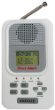
Sima WX-200 Emergency Alert Radio

Durofix Emergency Standby Plug-in High-Efficiency LED Lights (2-Pack)
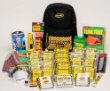
SKO Survival Kit Deluxe Emergency Disaster Preparedness 72 Hour Backpack
Kit Earthquake, Hurricane, Fire, Flood, Tornado, Evacuation or Storm.
Home, Work or Auto: 4 Person
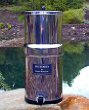
Big Berkey Water Filter with 2 7" ceramic filters
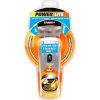
3LED Self PWR CrankLite
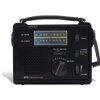
C. Crane CC Observer Wind Up Radio