





















Found a good "Firestorm / Wildfire Survival" link? Let Us Know!
Firewise
Landscaping For thousands of years, we have enjoyed beautifying our surroundings. From the earliest recorded gardens of the Egyptians in 3000 BC. to today's landscaping, the principles of unity, balance, proportion, and variety remain as the basic design tools of landscape architects, designers, and nursery professionals...
Peak
Fire Seasons Very cool. Click on a month and see how the nation's fire
hazards change...
New Generation Fire Shelter
(pdf) The fire shelter is a mandatory item of personal protective equipment for all Federal wildland firefighters and must be carried on the fireline by everyone on Federal wildland fires. State, local, and rural Fire departments may have different policies regarding the fire shelter’s use. However, no one who is required to carry a fire shelter should
go on the fireline without reading, understanding, and practicing the recommendations in this booklet.
Fire
Hazard Assessment in the Wildland/Urban Interface PDF
Version This website was developed by the National Wildland/Urban
Interface Fire Protection Program with two purposes in mind. First, to educate
homeowners and developers of the wildfire problem. And second, to show
homeowners and developers simple steps they can take to make homes built in the
wildland safer and more likely to survive a wildfire...
Everyone's
Responsibility or
PDF
Version or
Video
Version: The National Wildland/ Urban Interface Fire Protection Program originally used the term "interface" in a generic way to describe any area where potentially dangerous combustible wildland fuels were found adjacent to combustible homes and other structures...
Firewise
Checklists PDF Version only: A two-page checklist for landscaping
design and new home construction
Is
Your Home Protected From Wildfire Disaster? PDF Version only: A Homeowner’s Guide to Wildfire Retrofit. The purpose of this document is to provide homeowners with guidance on ways to retrofit and build homes to reduce losses from wildfire damage. It contains suggestions and recommendations based on professional judgment, experience and research and is intended to serve only as a guide...
Firewise
- Around Your Home PDF Version only: Snazzy illustrated pamphlet - A
two-page checklist for landscaping design and new home construction.
FIRE BEHAVIOR
"Fire
Behavior" Handouts and
"Fire
Behavior" Overhead Transparencies
STRUCTURE PROTECTION STRATEGIES:
"Structure
Protection Strategies" Handouts and
"Structure
Protection Strategies" Overhead Transparencies
FIREFIGHTER SAFETY:
"Firefighter
Safety" Handouts and
"Firefighter
Safety" Overhead Transparencies
Below are links to FIREWISE Interactive modules,
in a variety of formats, from HTML to FLASH and Shockwave:
Firewise Hints
Dynamics of Wildfire
Explore a Firewise Home - VR Tour
Preparing a Home for Wildfire Season
Wildfire Approaching
Perry Park Interactive Q&A
How Firewise Are You?
Final
Report on Fuel Treatments and Fire Regimes [PDF file] The size and severity of recent fire episodes are widely attributed to altered fuel profiles as a result of fire exclusion and fire regime disruption in many ecosystems. Current national fuels management initiatives propose widespread application of prescribed fire and other treatments both to reduce the potential of catastrophic wildfire and to restore the structure and function of altered ecosystems. However, the chain of hypotheses that link historic fire regimes to appropriate fuel treatment application has not received a systematic assessment. This project seeks to provide such an assessment with a series of quantitative literature syntheses that focus on the following questions...
Wildfire
Basics - Before, During & After There are three different classes of wildland fires. A surface fire is the most common type and burns along the floor of a forest, moving slowly and killing or damaging trees. A ground fire is usually started by lightning and burns on or below the forest floor. Crown fires spread rapidly by wind and move quickly by jumping along the tops of trees. Wildland fires are usually signaled by dense smoke
that fills the area for miles around...
Wild
Land Fire Behavior Basic Concepts By
Eli, 13 May 2003. This is article 1 of 2. This is covering fire behavior and the
2nd article will cover suppressing it and strategies you can use to
defend your homestead/retreat from a wild land fire.
"Coping
with Wildfires" (c)
1993, Willis Lamm, TrailBlazer Magazine "COPING WITH WILDFIRES" By
Willis Lamm Reprinted with permission of TrailBlazer Magazine for non-commercial
use. Imagine you and some friends are enjoying an afternoon ride in the
foothills. You are in moderately open country, broken by handfuls of oak trees.
The wind is whispering through golden, waist high grasses. As you descend around
the curvature of one of the hills you notice below you a rather large and wide
based column of smoke. The wind is blowing in your direction. What would you do?
FACT
SHEET: FIRE Storms The threat of wild fires for people living near
wildland areas or using recreational facilities in wilderness areas is real.
Advance planning and knowing how to protect buildings in these areas can lessen
the devastation of a wildland fire.
Wildfire
Safety Short tip sheet.
American
Red Cross- Wildfire The American Red Cross helps keep people safe every
day as well as in an emergency thanks to caring people who support our work in
the community. Here they present a rather lengthy but generalized tip sheet on
what to do if caught in a wildfire.
Forest
Service Fire & Aviation Management Division of the USDA Forest
Service is responsible for wildland fire throughout the nation's forestland.
Check out fire reports, and read news.
Western
Forest Fire Research Center Interdisciplinary research facility at
Colorado State University explores forest fire prevention and control
Firestorm physics (halfway down the page) This
description of the physics of mass fire is based on the work of a few
scientists who have examined in detail the damaging effects of nuclear
weapons, including nuclear engineer Theodore A. Postol and physicist Harold
Brode. Postol is one of the country's leading non-government-funded
technical experts on nuclear weapons, missiles, and arms control. Brode's
five-decade career has been devoted to the study of nuclear weapons effects.
On fire effects of nuclear weapons and military planning Eden
claims that fire effects are predictable, which is not true. Note that mass
fires did not result from detonations on Pacific islands and in the Nevada
desert. Mass fires require fuel. It is not clear that a nuclear detonation
over a city will leave enough fuel widely exposed. Recall that the collapse
of the WTC towers largely extinguished the mass fires of burning jet fuel
and office contents. Some buried fires continued, but in a blast demolished
city this won't support a firestorm. The mere examples of Hiroshima and
Nagasaki (firestorm in one, conflagration in the other, both in comparable
urban environments with comparable weapons) show unpredictability.
Causal Discussion: Example The consequence of a mass fire is total
devastation within the affected area. The temperature in a mass fire can
exceed 1000 degrees Celsius, a temperature higher than necessary to melt
glass and metal and to burn ordinary fireproof materials. In addition to the
burn casualties, carbon monoxide and other toxic gases generated by the fire
would be deadly.
FIRE BEHAVIOR AND FIRELINE SAFETY The main physical aspects of
forest fire propagation are described with the intention of illustrating its
complexity and the risks associated with fire-fighting activities. The
various modes of fire propagation and corresponding heat transfer mechanisms
are described in relation to their effects on personnel working on the
fireline. Some study cases of fatal accidents caused by forest fires are
presented in order to emphasize the importance of having an adequate
assessment of fire behavior, together with training and adequate protective
equipment, in order to prevent this type of accident.
Wikpedia results for "Great Urban Fires"
A Reporter's Guide to Wildland Fire Takes a long time to download this 38 page PDF, but if you are patient, it is worth reading.
Please Read The Website Disclaimer!
Copyright 1986-2012, The Survival & Self-Reliance Studies Institute (SSRsi), All
Rights Reserved
Site conceptualized, designed, created & maintained by MEG Raven
Snail Mail: SSRsi, PO Box 2572 Dillon, CO. 80435-2572
Essentials:

Vulcan Cowboy Hard Hat, 6pt Reg. Lock Suspension - Black

King Cobra Classic Nomex®/Lenzing FR® Hood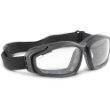
Eye Safety Systems Advancer V-12TM Goggle
Nomex IIIA Flame Resistant 9.4 oz. Fleece Sweatshirt
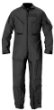
Black Nomex Flight Suit
Nomex IIIA Coverall (4.5 Oz.) Size Large
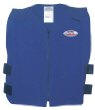
Phase Change Cooling Vest-NOMEX (1 vest)
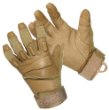
BlackHawk® Hellstorm® S.O.L.A.G.™ Glove with Nomex®
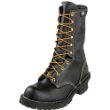
Danner Men's Flashpoint Firefighter's Boot
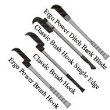
Nupla Brush Hooks and Ditch Bank Blades
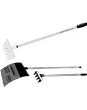
Nupla Specialty Fire Tools
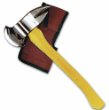
Truckman 69120 Fire/Demolition Axe with Fire Resistant Scabbard and Belt
Guide Survival Kit by BOLS (1 kit)

New-Generation Fire Shelter
This is the cheapest place I could find for an
authentic shelter. SSRsi is not affiliated with this site.